

Begin Your Journey to Better Vision

Medical Eye Care
Shields eyes from injury, UV rays, and harmful debris, preserving vision and promoting safety.

Dry Eye Relief
Dry Eye Syndrome is a persistent, unfortunately common eye condition affecting people of all ages.

Contact Lenses
Thin, curved lenses worn on the eye's surface to correct vision. They offer a convenient alternative to glasses, providing clear vision and versatility.

Lenses & Frames
Customized lenses at Waller Family Eye Care paired with stylish frames to correct vision and suit personal style, ensuring clarity and comfort.

Eye Exams
Routine eye exams at Waller Family Eye Care are essential for detecting vision problems, monitoring eye health, and identifying early signs of conditions like glaucoma or macular degeneration.

Myopia Management
Myopia, or nearsightedness, occurs when the eye doesn’t focus light properly on the retina, making distance vision blurry.

Eye Doctor Waller TX
Welcome to Waller Family Eye Care, which is located in Waller TX. We offer comprehensive eye care services to enhance vision and promote eye health. The top-rated Dr. Tara Bailey and Jose Payan O.D., has years of experience in providing safe, effective, and personalized eye care to patients in Waller and surrounding areas. We want to be your Waller TX eye doctor.
We invite you to visit our optometry office for a range of services, to achieve and maintain optimal vision and eye health.
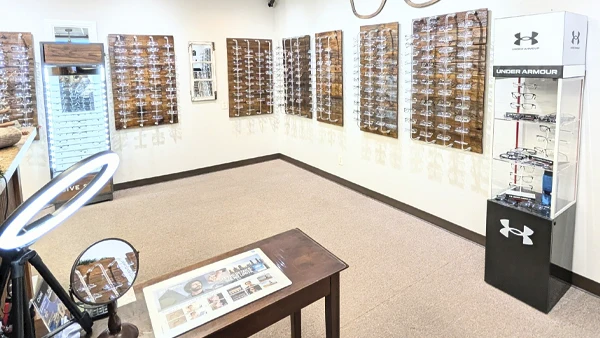
Don't forget to use the "WFEC" discount code to receive 20% off your order!


Welcome To Waller Family Eye Care
It is our privilege at Waller Family Eye Care to provide the most comprehensive eye care by respecting and meeting our patient’s unique and individual needs with precision and compassion. Our patients are valued and treated like family as soon as they walk through our door. It is our passion to enhance each person’s quality of life with the clearest vision possible, both here in our community and throughout the world. We want everyone to understand that how you care for your eyes today, affects how you see tomorrow. Vision is a precious gift. We are here to ensure that you are able to open this gift daily for many years to come.
The Importance of Vision Care Even Without Apparent Issues
At Waller Family Eye Care, our optometry staff works together to ensure your visit is comfortable and completed in a timely manner. We have a qualified team of professionals that will work around your busy schedule and address any questions or concerns prior to the appointment. Whether it’s a general eye exam or treating a condition that requires an in depth diagnosis, our team provides undivided attention to each patient so we can evaluate a plan based on your needs and our professional opinion. Dr. Bailey offers full vision examinations and will diagnose and treat an array of eye diseases and conditions to keep your eyes healthy!
The History of Eye Care
The history of eye care dates back thousands of years, with ancient civilizations making significant contributions to our understanding of vision and eye health. In ancient Egypt, around 1550 BC, the Ebers Papyrus documented various treatments for eye diseases, highlighting the early recognition of the importance of eye care. The Greeks and Romans also made notable advancements, with renowned figures like Hippocrates and Galen studying and writing about ocular anatomy and conditions. Their work laid the foundation for future medical practices and the development of specialized eye care.
During the Middle Ages, Islamic scholars such as Alhazen (Ibn al-Haytham) made groundbreaking strides in optics and vision science. Alhazen's Book of Optics, written in the 11th century, challenged earlier Greek theories of vision and introduced new concepts about how light and the eye interact. The Renaissance period saw further advancements, particularly with the invention of spectacles in the late 13th century, which revolutionized the way people corrected their vision. These historical milestones collectively contributed to the evolution of modern ophthalmology and optometry, leading to the sophisticated eye care practices we benefit from today.
Some Key Regions Of The Eye
The human eye is a marvel of biology, composed of several intricate regions that work together to capture and process visual information. Understanding these key areas is essential to appreciating how vision works and recognizing potential issues affecting eye health.

Cornea: Transparent dome, covers iris and pupil, focuses light, protects the eye, key to vision.
LensLens: Transparent, focuses light, adjusts for distance, essential for clear vision.
ScleraSclera: The white outer layer, protects the eye, maintains shape, and supports internal structures.
PupilPupil: Central opening, regulates light entry, adjusts size, vital for vision clarity.
RetinaRetina: Light-sensitive layer, that converts light to signals, enables vision, and connects to optic nerve.
Vitreous BodyVitreous Body: Clear gel, fills the eye, maintains shape, supports retina, transmits light.
Optic NerveOptic Nerve: Transmits visual signals, connects the eye to the brain, essential for sight.
Optic DiscOptic Disc: The blind spot, where the optic nerve exits, lacks photoreceptors, crucial for signal transmission.
What Kind of Training Does an Optometrist Have?
Optometrists undergo extensive training to become experts in eye health and vision care. Their education begins with a bachelor's degree, typically in a science-related field, followed by enrollment in a four-year optometry program at an accredited optometry school. During these four years, optometry students study various subjects, including optics, visual science, anatomy, physiology, and pathology of the eye. They also receive hands-on clinical training, where they learn to diagnose and manage a wide range of eye conditions, prescribe corrective lenses, and provide vision therapy.
In addition to their formal education, optometrists must pass a series of rigorous exams to obtain their license to practice. This includes the National Board of Examiners in Optometry (NBEO) exams, which test their knowledge and clinical skills. Some optometrists choose to further specialize in areas such as pediatric optometry, geriatric optometry, or ocular disease through residency programs, which provide an additional one to two years of focused training. Continuous education is a crucial part of their career, as they must stay updated with the latest advancements in eye care and treatment techniques to provide the best possible care for their patients.

Begin Your Journey to Health in 3 Easy Steps